
Plumber · Dallas–Fort Worth
Plumbing in Dallas–Fort Worth. Found, fixed, tested.
Slab leaks, hidden leaks, failing pipe and tired water heaters. We locate the fault, explain what caused it and put a price on the repair before any of it begins.
- A price before any work starts
- Your approval before we begin
- Repairs tested, work area left clean

Services
What we work on
Leak work leads the list. On North Texas slabs and clay, it has to.
How every job runs
Price first. Approval second. Work third.
You hear what failed and why. You get the price for fixing it. Nothing starts until you say yes. The order does not change.
How we workNorth Texas ground
The slab sits on clay. The pipes sit under the slab.
North Texas clay expands in a wet spell and contracts in a drought. Each season the slab moves a little, and the copper lines beneath it flex. After a few decades, one of them wears through.
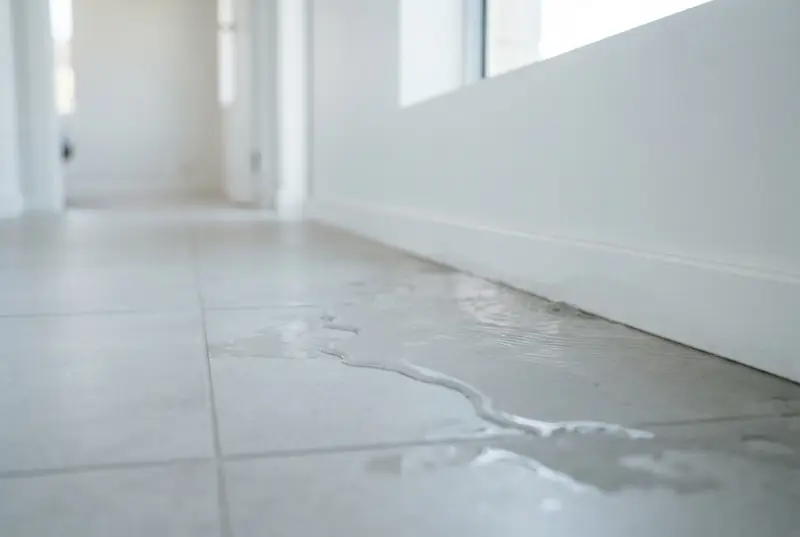
A slab leak rarely announces itself with a puddle. Look for the indirect signs instead.
- A warm patch of floor
- The sound of water with everything off
- A meter that never stops turning
- A bill that keeps climbing
Know your pipe
The year your house was built predicts what will fail
Pipe materials changed by the decade, and each one wears out in its own way. Newer homes, plumbed in PEX and PVC, mostly stay off this list.
Galvanized steel
Water supply pipe in homes built before about 1960. It closes up with rust from the inside. Low pressure and discolored water are the tells.
Cast iron
Drain pipe in homes built before the 1980s. It corrodes along the bottom, under the slab. Repeat backups follow.
Copper under the slab
The standard supply pipe for decades. Soil movement works it against the concrete until it pinholes. The result is a slab leak.
Polybutylene
Gray plastic supply pipe installed between the late 1970s and the mid-1990s. It fails at the fittings, often without warning.
Process
Four steps, in order
Diagnose
We test before we guess. Meter, pressure gauge, camera or all three, depending on the problem.
Explain and price
We show you the failed part or the reading and explain the cause. The price for fixing it comes next, ahead of any work.
Repair
Once you approve, we do the work that was priced. If the job changes, the conversation happens before the work does.
Test and clean up
The repair is tested while we are still on site. Cleanup comes last, and it is part of the job.
Water quality
Hard water is a plumbing problem
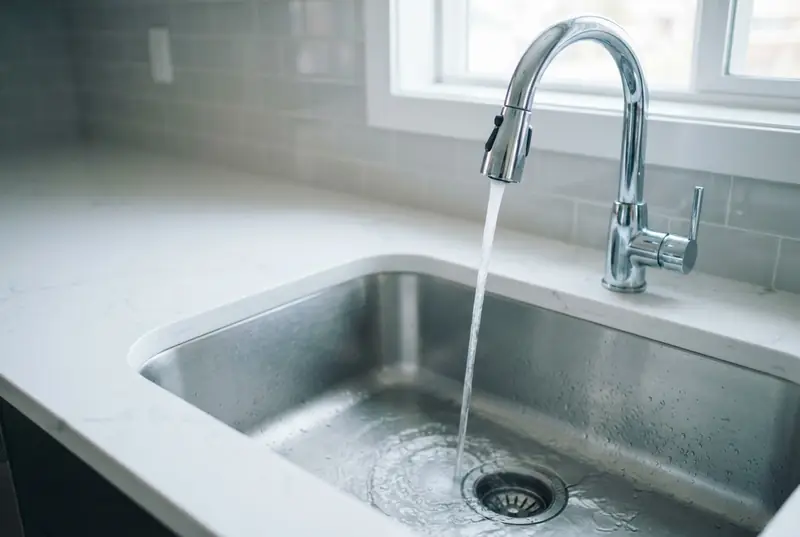
The water supplied across Dallas–Fort Worth carries enough dissolved minerals to leave scale. Scale fills water heaters with sediment, coats tankless heat exchangers and shortens the life of the working parts inside faucets and toilets.
A softener stops scale where the water enters the house. A carbon filter handles the chlorine taste. They are different machines for different problems, and it pays to know which problem you have.
Questions
Good questions
What does Lone Star Plumber work on?
Plumbing for homes across Dallas–Fort Worth, with a focus on leak work: slab leak detection and repair, hidden leak detection and whole-home repiping. We also repair and replace water heaters, install water softeners and filtration, clean drains, inspect and repair sewer lines, and repair and install gas lines.
At what point do I get a price?
Before any work starts. You first hear what broke and the reason, then the price. After that it is your call whether the work goes ahead.
How can I tell if I have a hidden leak?
Stop all water use in the house, then go look at the meter. A flow indicator that keeps turning means water is leaving the system somewhere. Toilets are the usual culprit, so test those first with dye in the tank.
Where do I turn the water off in a hurry?
There are usually two places. The first is the city meter box, set in the ground by the curb or the alley. The valve inside turns with a meter key or a wrench. The second, on many houses, is a separate valve in a ground box close to the front wall, or on the pipe where it comes through the wall. Locate both now, while nothing is leaking.
Why do pipes fail so often in North Texas?
Four reasons. Clay soil moves the slab and the pipes beneath it. Hard water scales up heaters and fixtures. Many homes were built with materials that have since reached the end of their life, such as cast iron and polybutylene. And a lot of the pipe in this region is routed through attics and exterior walls, exactly where a hard freeze reaches it.
Which cities do you serve?
We work across Dallas–Fort Worth, including Plano, Allen, McKinney, Richardson, Garland, Carrollton, Dallas and Frisco. Every one of them has a page here covering its housing and the plumbing that goes with it.
Service area
Cities we serve
Homes anywhere in Dallas–Fort Worth are in range. Pick a city for notes on its housing, the pipe typically found there and where its water comes from.
Plumbers across DFW
- Flush Hour Plumbing of CarrolltonPlumber in Carrollton, TX
- Rapid Response Plumber of GarlandPlumber in Garland, TX
- Wylie Plumbing Co.Plumber in Wylie, TX
- Longhorn PlumberPlumber in DFW
- Steady Hand PlumberPlumber in DFW
- Texas Tough PlumberPlumber in DFW
- The Cowboy PlumberPlumber in DFW